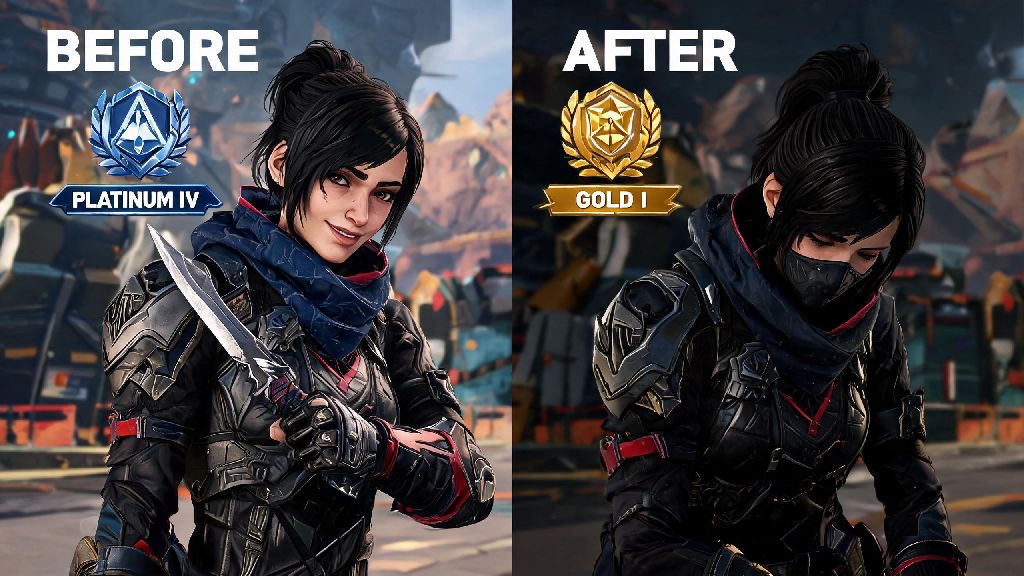
If you’ve spent hours grinding ranked matches to climb out of Bronze or lock in that coveted Masters badge, you’ve almost certainly wondered: can you demote in Apex Legends? Ranked mode is one of the game’s most popular loops, but its rules around progression and rank loss have shifted a lot over the years, leaving many players confused about what happens after a string of bad losses. I’ve been playing ranked since Season 3, and I’ve lost count of the times I’ve sweated through a final circle scared I’d drop out of Platinum right before the split ended, even playing a full match with a broken controller once just to avoid a loss. This guide breaks down exactly how demotion works, when it can happen, and how you can avoid it without ruining your fun.
Can You Demote in Apex Legends Ranked? The Short Answer
Yes, you can demote to lower tiers and divisions in current Apex Legends ranked play, though there are guardrails in place to prevent immediate rank drops after one bad match. This is a fairly recent change; before Season 13, players could not drop below a major tier they had earned, meaning if you hit Platinum, you would stay Platinum for the entire split no matter how many losses you had. That rule was updated to make ranked progression more reflective of actual skill, rather than just how many matches a player could grind in a split.
Demotion is only possible once you burn through all your rank protection points, or RP buffers, assigned to your current tier. These buffers are designed to give you room to adjust to the skill level of your new rank without immediately dropping back down. The amount of protection you get varies based on what type of rank you just earned, and there are some ranks where protection does not apply at all.
You will never drop below the Rookie rank, no matter how many losses you rack up. Rookie tier is specifically designed for new players learning the basics of Apex and ranked play, so there are no demotion penalties at this level to reduce frustration for people still getting the hang of the game. Once you move past Rookie into Bronze, though, demotion becomes a possibility.
How Ranked Demotion Buffers Work in Practice
To understand when demotion can happen, you first need to understand how RP and rank tiers are structured. All ranks below Master have four divisions, from 4 (the lowest in the tier) to 1 (the highest before the next major tier). Each tier has a minimum RP threshold you need to hit to enter it, and if your total RP drops below that threshold after a match, you will demote – unless you have active protection buffers.
Buffers are only awarded when you cross a major tier threshold, like moving from Gold 1 to Platinum 4, not when you move between divisions in the same tier. The rules for buffers and demotion are pretty straightforward once you break them down:
It’s also important to note that these buffers do not roll over forever. If you earn 3 demotion shields when you hit Platinum 4, and only use 1 of them over the course of the split, you lose the remaining 2 when the mid-season ranked reset hits. Demotion shields do not carry over between ranked splits, so you’ll lose any unused shields when the mid-season reset hits. You’ll also lose any active shields if you choose to drop out of ranked for multiple weeks, as the game resets your protection status for inactive players to prevent people from holding ranks they no longer have the skill to maintain.
Common Mistakes That Lead to Unnecessary Demotion
Most demotions don’t happen because you’re suddenly a bad player – they happen because of small, avoidable mistakes that add up over a few matches. I’ve been there too – I once dropped from Diamond 4 to Platinum 1 in a single night because I refused to stop queuing after a bad first match, and I ended up playing worse and worse as I got more frustrated. Recognizing these common mistakes can save you a lot of lost RP.
The biggest mistake by far is queuing while tilted. When you’re frustrated after a bad loss, you’re far more likely to make risky plays, ignore your team, and pick fights you can’t win, all of which lead to more losses. A lot of players think they need to “make back” the RP they just lost immediately, but that mindset almost always leads to a longer loss streak.
Another common mistake is prioritizing kills over placement. Placement earns 60% of your total RP in most matches, so finishing top 10 with zero kills will almost always give you more RP than getting 5 kills and finishing 15th. A lot of players chase early game fights to pad their kill count, then get eliminated 5 minutes into the match and lose a bunch of RP for a bad placement.
Leaving matches early is another huge RP drain that leads to unexpected demotion. If you leave before your entire squad is eliminated, you forfeit any RP you would have earned from your team’s final placement, even if your squad goes on to finish top 3. You also lose your full entry cost, no matter how well you played before you died. Never leave a ranked match before your entire squad is wiped, unless you have a genuine emergency that forces you to log off.
Actionable Tips to Avoid Demotion Without Grinding 24/7
You don’t have to play 8 hours of ranked a day to hold your rank. A few small adjustments to how you queue and play can drastically reduce your risk of demotion, even if you only play a few matches a week. The first and most effective tip is to set a strict loss limit before you start queuing. I personally use a 2-loss rule: if I lose two matches in a row, I take a 30 minute break to play mixtape, grab a snack, or walk outside, so I don’t queue tilted. It’s simple, but it’s cut my loss streaks by 70% over the past two seasons.
If you can, play with at least one consistent squad mate instead of queuing solo with randoms. You don’t need a full 3-stack, but playing with someone you know communicates well eliminates a lot of the miscommunication that loses matches. I play most of my ranked matches with one friend I’ve been queuing with for years, and our win rate is 2x higher than when I queue solo, just because we know how each other plays.
You also don’t have to play aggressively every match to hold your rank. If you’re at the bottom of a tier with zero demotion shields left, there’s no shame in playing more passive for a few matches to lock in consistent small RP gains. Hiding in a building for the first two circles to get a top 10 placement might not be the most exciting way to play, but it’s far more reliable than risky third parties that either give you a huge RP gain or a huge loss.
Small, consistent RP gains are far more reliable for holding your rank than risky plays that either give you 200 RP or lose you 100 RP every match. Even if you only gain 20 RP per match, that adds up over time, and you won’t have to worry about sudden demotions from one bad play.
At the end of the day, ranked play is supposed to be fun, even if you’re grinding for a higher badge. Knowing the answer to can you demote in Apex Legends takes a lot of the stress out of matches, because you’ll know exactly how much risk you can take before you’re at risk of dropping a tier. Don’t beat yourself up if you do demote occasionally – even pro players drop ranks during bad streaks, and you can always climb back up with a few smart matches. The key is to focus on improving your gameplay one match at a time, rather than obsessing over your RP count every second.